
NISENAN MIWOK COLLECTIVE
Native Lead Tribal Nonprofit 501c3 for the Southern Hill Nisenan Band
Nisenan Miwok Collective Mission Statement:
Through Ancestral Guidance, we work to support Land and Water Restoration, Food Sovereignty, Cultural Practices and ceremonies, and the inherent Right to Self-determination and Economic Resiliency for our People, the Southern Hill Nisenan of the Sierra Nevada.
Rematriation of Southern Hill Nisenan Ancestral Homelands
Land Return
Support the return and restoration of lands within the First Aboriginal territory of the Southern Hill Nisenan—advancing rematriation by placing land back into Native stewardship through direct gifts, tax-deductible donations, and land or estate transfers that create a lasting, shared benefit. Every contribution, of any size, helps move us forward in rematriating land within our homelands.
Jane Rey Frank’s Exchange
Who We Are
The Nisenan Miwok Collective 501(c)(3) is the nonprofit arm of the Southern Hill Nisenan Tribal community. While the Southern Hill Nisenan Band represents the people, families, and cultural leadership of our tribe, the Collective serves as the operational entity advancing programs, partnerships, and funding strategies in support of our community.
Our work is grounded in Rematriation efforts within the Southern Hill Nisenan ancestral territory, including El Dorado County, Plymouth, and the forks of the Cosumnes River—where our headsmen signed Treaty J in 1851. These efforts seek to restore Indigenous stewardship to lands unlawfully taken during the Gold Rush era, where our people experienced state-sanctioned violence, displacement, and dispossession.
Through land return, conservation partnerships, and strategic acquisition, we are working to reestablish a permanent Southern Hill Nisenan presence at culturally significant village sites and landscapes. This includes restoring traditional ecological knowledge (TEK) practices, protecting sacred sites, revitalizing native food systems, and stewarding watersheds in alignment with our ancestral responsibilities.
The Nisenan Miwok Collective advances these efforts through land and water restoration, food sovereignty, cultural revitalization, and community-based economic development—ensuring that the leadership, knowledge, and sovereignty of the Southern Hill Nisenan people guide the long-term care and protection of our homelands.
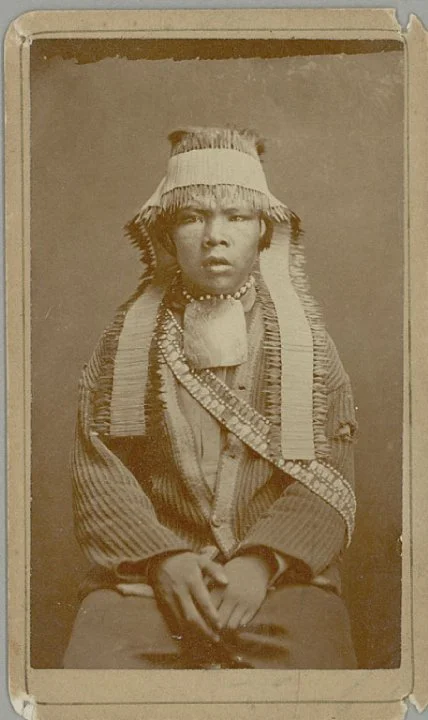
Tom Lewis Jr. Grandson of Headsman Hol-Lah - 1874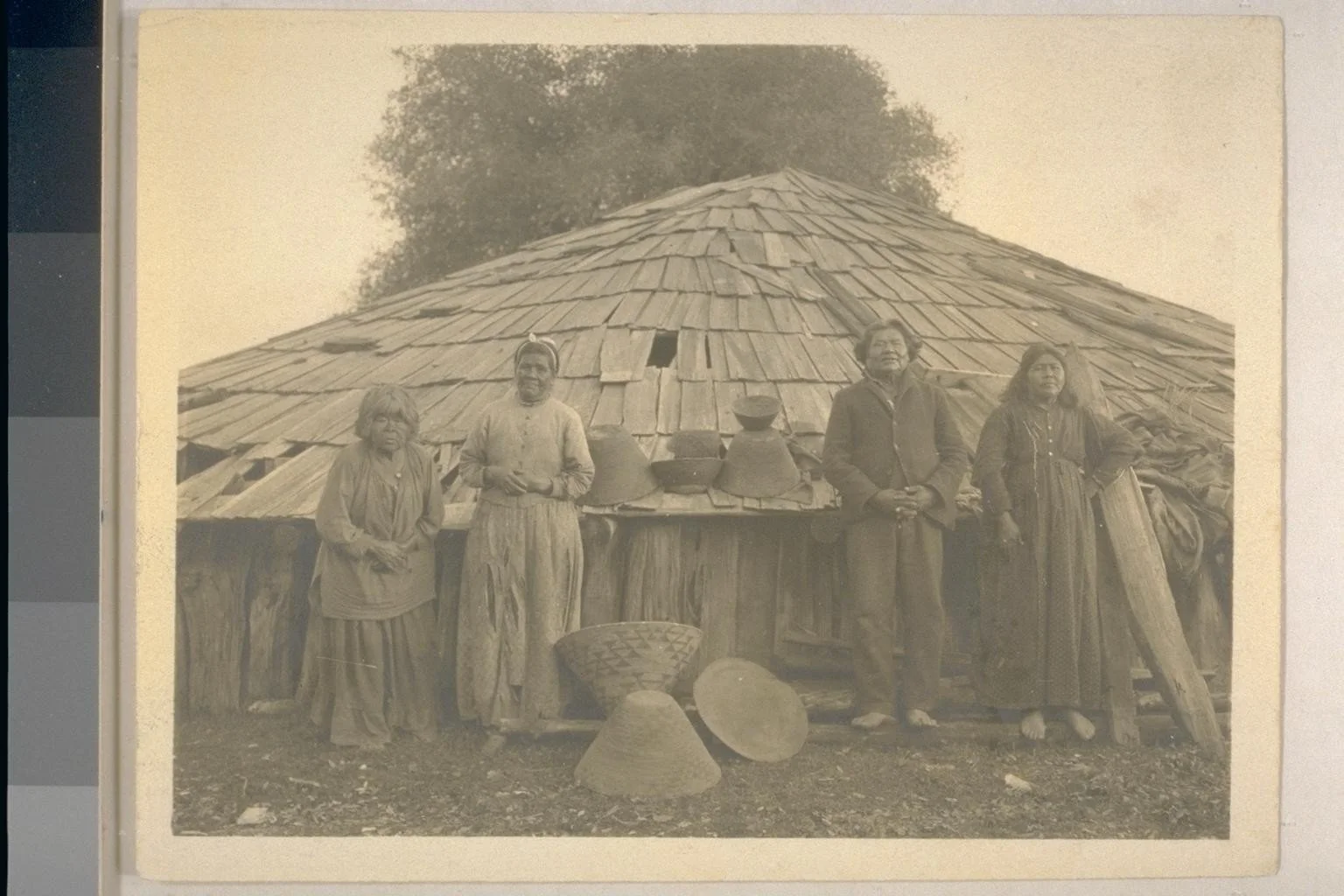
Chief Hunchup, his wife Suzie Sally Mountain Hunchup, and his sister at the Nisenan Village Site of Koot-Bah. Photo by C. Hart Merriam Dec 2, 1904.
Statement of Need
The Southern Hill Nisenan remain largely landless within our Ancestral Territories in El Dorado County and the Plymouth region due to historic dispossession following first discovery of Gold in our village site of Coloma, and the unratified 1851 Treaty J signed by our Headsman. Today, this lack of land access continues to limit our ability to practice Traditional Ecological Knowledge (TEK), Land and Riverway restoration, and regenerative farming systems that sustain healthy soil, water, biodiversity, and food networks in this region for thousands of years.
El Dorado County includes more than 1.1 million acres of diverse ecosystems, yet increasing wildfire intensity, watershed degradation, and soil erosion threaten both environmental and agricultural sustainability. At the same time, food insecurity affects an estimated 12.8% of residents in the region, and barriers to rural access limit equitable participation in local food systems.
By restoring access to land within our Ancestral Territory, the Nisenan Miwok Collective seeks to integrate Traditional Ecological Knowledge (TEK) with regenerative farming practices to rebuild soil health, support biochar, protect the Cosumnes River watershed, expand native seed propagation, and strengthen pollinator habitats.
This work advances Food Sovereignty — the right of our People to grow, harvest, and distribute culturally relevant foods through ecologically sustainable systems — while strengthening climate resilience, economic opportunity, and self-determination for the Southern Hill Nisenan and our broader community.
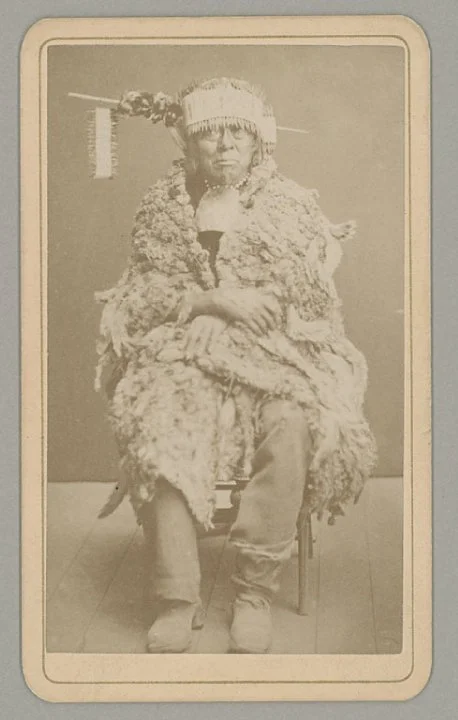
Nisenan Headsman Hol-Lah, signatory of the 1851 Treaty J, signed at the Southern Hill Nisenan Central Hub
Treaty J Forks of Cosumnes River
Treaty J was signed by Nisenan Huk (Headsman) ‘Inkoi, Mo-tos, Hol-Lah, and Boyer at the Nisenan Village Site located near the central hub of the Southern Hill Nisenan Nation.
We honor our people's legacy through engagement with our community, State Parks, El Dorado County, local schools, and businesses throughout both El Dorado County and Plymouth, California.

Shown here is the ancestral territory of the Southern Hill Nisenan Band (red), within the larger Nisenan Nation (blue). Together, the Southern, Central, and Northern Hill Nisenan bands form the Nisenan Nation, representing interconnected kinship communities with shared cultural, ecological, and territorial stewardship.
Ancestral Lands
The boundaries of the Southern Hill Nisenan encompass an area “West to the lower edge of the timber where the digger pine and blue oak are, to Latrobe then to Salmon Falls on the South Fork American River down to Michigan Bar named for the water oak on the Cosumnes River”.
Treaty J occurred in the settlement central to the Southern Hill Nisenan Territory, at the confluence of two streams at the northernmost area of the Treaty Lands designated to be the reservation. Covering an area of 6-miles by 11-miles the settlement consisted of the contact period Anglo places of Nashville, Bay State, Enterprise, Shannondoah, Plymouth, Shingle Spings, Placerville, and habitation areas along the North and Middle Forks of the Cosumnes River. The Southern edge of the Hill Nisenan Territory reaches south past Plymouth and into the fluid boundry between the Hill Nisenan and Northern Sierra Miwok. The treaty encampment of the military was located on the northern point of the reservation land designated for occupancy.
Make an Impact Today
Cosumnes River Watershed
Why Give?Make a Difference
Your donation helps create real, measurable change in returning land to the First People of El Dorado County and Plymouth, California!!
Inspire Others
Your generosity can motivate friends, family, and colleagues to do the same.
Meet the Team
-

Laura Galvan
Southern Hill Nisenan Tribal Member
Chairwoman
Nisenan Miwok Collective
-

Regina Martinez
Southern Hill Nisenan Tribal Member
Board Member
-

Kimberly Tripp
Southern Hill Nisenan Tribal Member
Board Member
-